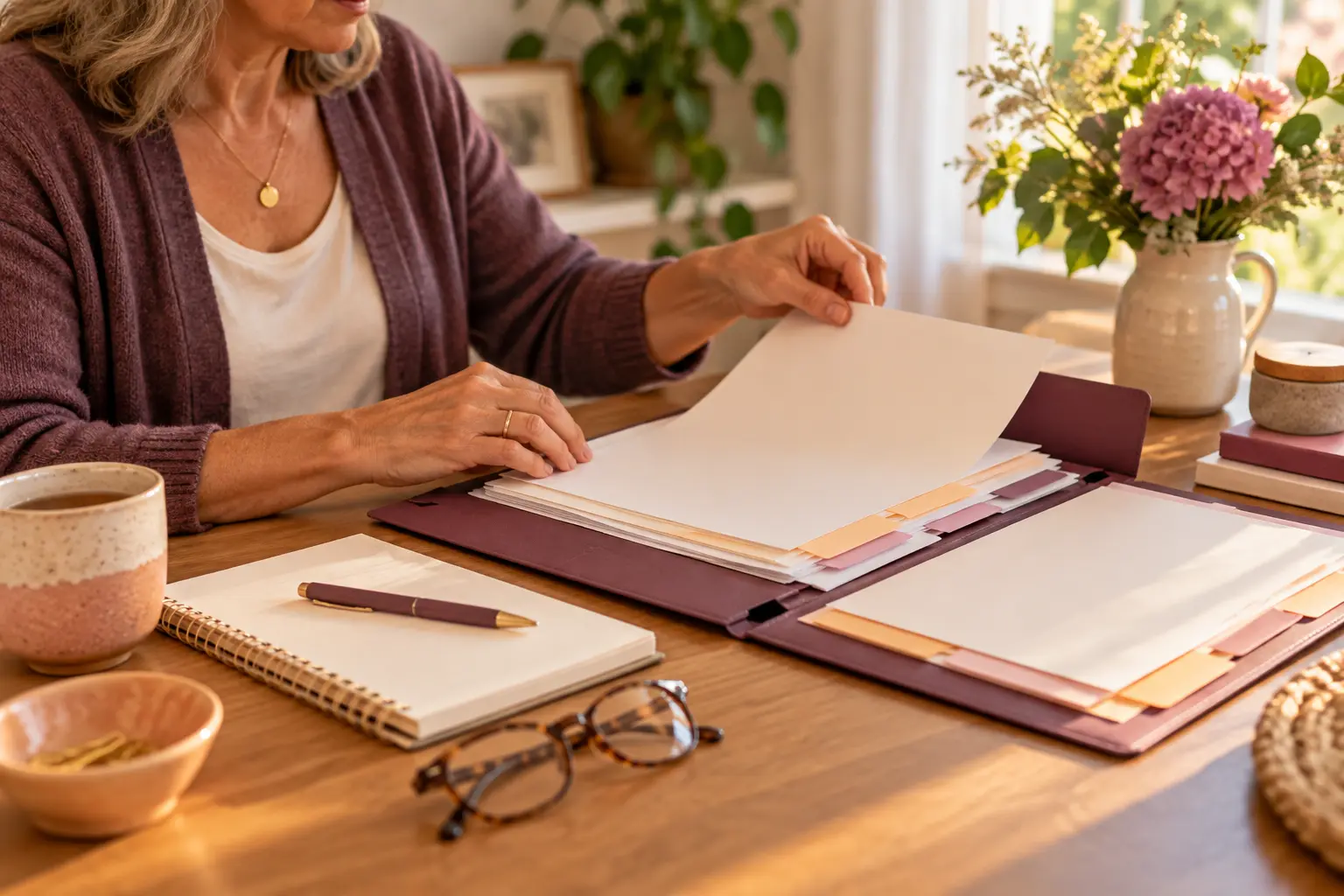
Give the folder one simple job
Use the folder to keep the information you want available at an appointment. It is not a diagnostic record and it does not need to be perfect. A paper folder, notes app or secure digital folder can work; choose the format you will actually open.
Start with a one-page priority sheet
- The main reason for the appointment, in your own words.
- Up to three concerns in priority order.
- When each concern began and how it affects daily life.
- The questions you most want answered.
- Any communication, mobility, hearing or language support you want to request.
Keep a current medicines list
Record prescribed medicines, over-the-counter products, vitamins and supplements, including the dose shown on the label and how you take them. Do not stop or change medicines because of an article or tidy-up exercise. Ask a pharmacist or clinician when a list is unclear.
Add records without building an archive
Keep only the documents that help the next conversation: recent letters, relevant test results, referral details and contact information for other clinicians. Put the newest item first and remove duplicate copies.
Use a follow-up page
- What was agreed.
- Any tests, referrals or treatment changes.
- Who will contact whom.
- When to seek follow-up.
- Anything you did not understand and want clarified.
Protect privacy and urgent care
Store the folder somewhere appropriate for the sensitivity of the information and avoid including passwords or payment-card details. New or severe symptoms may need prompt or emergency care; do not wait for a routine appointment or for the folder to be complete.
Sources and further reading
- National Institute on Aging: How To Prepare for a Doctor's Appointment
- National Institute on Aging: Taking Medicines Safely as You Age
Sources support the linked sections. This page is published general information, not clinical advice, diagnosis or treatment, and it has not been clinically reviewed.
YOUR NEXT SMALL STEP
Prepare for a useful conversation.
Organise the questions you want to take to your menopause appointment.
Plan your conversation