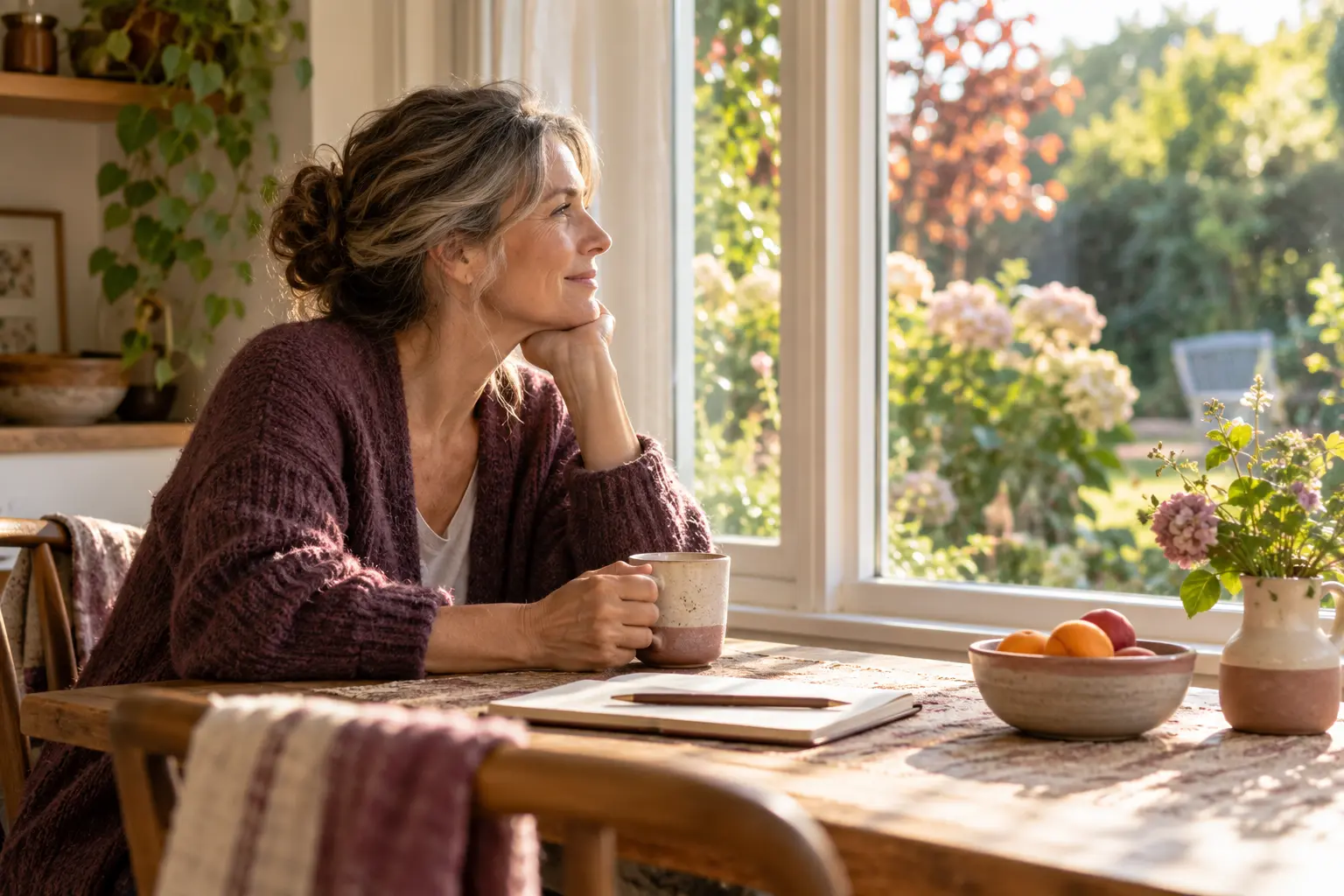
Light is one signal among several
Circadian rhythms are physical, mental and behavioral changes across roughly 24 hours. NIH explains that light and dark have the biggest influence, while food intake, stress, physical activity, social environment and temperature can also affect them. That makes morning light a useful routine cue, not a stand-alone treatment.
Make the cue easy to notice
After waking, open curtains and, when it is safe and practical, spend part of the morning outdoors. Do not stare at the sun. Weather, season, latitude, shift work, eye conditions and medicines can change what is appropriate, so this draft avoids prescribing a universal exposure time.
Pair light with an ordinary action
- Open the curtains while preparing breakfast.
- Step outside while checking the garden, taking a short walk or having a drink.
- Keep wake time reasonably consistent when your circumstances allow.
- Notice evening light as well as morning light; very bright light late at night can work against a preferred routine.
Track the routine, not a promised result
For one week, note wake time, the morning light opportunity you used and how the routine fitted your day. A simple record can show whether the habit is realistic. It cannot diagnose a circadian disorder or prove that light caused a change in sleep.
Know when to ask for help
Speak with a health professional if sleep problems persist, cause significant daytime sleepiness, affect safety or occur alongside other concerning symptoms. People with eye conditions, bipolar disorder or medicines that affect light sensitivity should seek individual advice before using bright-light devices.
Sources and further reading
Sources support the linked sections. This page is published general information, not clinical advice, diagnosis or treatment, and it has not been clinically reviewed.
YOUR NEXT SMALL STEP
A calmer evening
Seven small planning prompts for a gentler end to the day.
Explore a calmer evening